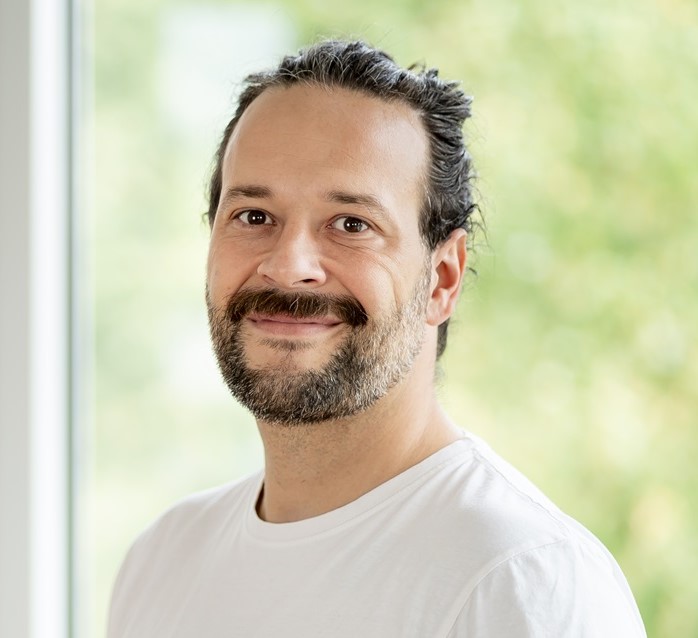

I am a plant ecologist and remote sensing scientist working at the interface of ecology, agriculture and plant pathology. My research asks how plant disease can be detected across scales, from the spectral signature of an infected leaf to the footprint of an outbreak across a landscape. And, just as importantly, why detection that works under controlled conditions so often breaks down as we scale up. Understanding where the signal degrades, and building detection that survives the jump from leaf to landscape, is the through-line of my work. I am especially interested in plant–pathogen–environment interactions. A central frontier in this work is that scaling disease detection to the landscape is limited less by sensors than by knowing where hosts and inoculum sit in the landscape. Wild and alternative host plants, the reservoirs linking cultivated fields, are rarely mapped at usable quality, so I focus on resolving their spatial distribution as the reference-data foundation for landscape-scale disease risk models. My broader motivation is to identify co-benefits at the interface of natural and cultivated landscapes that support both sustainable agriculture and resilient ecosystems. I am trained in bioengineering HAW Hamburg and plant ecology Universität Hamburg, with research stays in Valencia, Sydney, Gainesville, Pretoria and Ghent. I welcome students interested in spectral disease detection, host-plant mapping, or the scaling problem between them. For more on my research, or to discuss collaboration and thesis supervision, please get in touch (rene.heim@uni-goettingen.de).